Prof. Dr. Nataliia Bohdanets-Biloskalenko
Dr. Larysa Shevchuk
Dr. Igor Goroshkin
National Academy of Educational Sciences of Ukraine
https://doi.org/10.53656/bel2026-2-3N
Abstract. The article substantiates the importance and relevance of developing reading literacy among students in the process of learning the Ukrainian language in grades 3 – 4 in schools with Bulgarian and other national minority languages of instruction. The essence of the concept of reading literacy is examined. The article presents the results of an analysis of scientific and methodological literature, including various interpretations synthesised both independently and in the context of the international PISA study. It also describes the findings of a survey conducted among teachers who teach Ukrainian as the state language to students in grades 3 – 4. In particular, the study identifies teachers’ understanding of the term reading literacy and their current teaching practices. Within the framework of reading literacy development, different aspects of working with texts are characterised. The factors influencing the formation of reading literacy among students in grades 3 – 4 are determined, and effective resources, methods, strategies, and techniques for its improvement are highlighted.
Keywords: teaching reading to students in grades 3 – 4, schools with instruction in national minority languages, reading literacy, competent reader
Reading literacy is an essential aspect of mastering the Ukrainian language as the state language for students in grades 3 – 4, with instruction in national minority languages. It underscores the significance and necessity of studying its current state in practice. To address the problem, we consider it beneficial to clarify its different components with the help of teachers, which creates conditions for implementing a comprehensive approach – identifying existing shortcomings and factors that influence the development of reading literacy among 3rd – 4th grade students.
The purpose of this article is to examine the essence and clarify the features of reading literacy among students in grades 3 – 4 of general secondary education institutions with instruction in national minority languages, including Bulgarian.
For a thorough study of the problem, an analysis of the scientific literature on the problem was conducted. Thus, the specifics of learning Polish (as the state language) by Ukrainians in Poland are described in detail in the research of P. Levchuk (Levchuk, 2015). In particular, the main emphasis is placed on aspects of bilingualism.
Modern researcher A. Petrov describes the results of a study of the problems of reading practices of students in grades 5 – 12 in secondary schools in Bulgaria and in Bulgarian Sunday schools abroad (how often do students read; how many books do they have; what do students pay attention to when reading; reasons for the insufficient formation of reading skills in children and adolescents, etc.) (Petrov, 2024). The scientist pays attention to the texts preferred by students, specifying the typology, content, structure, style, and preferred medium. A. Petrov lists the qualities of an educated and conscientious reader (purposefulness, criticality, emotionality, etc.), notes that the use of digital communication technologies negatively affects the frequency of reading information on paper media.
The comprehensiveness of the research is of particular importance. Scholar Maya Padeshka discusses factors such as age, gender, social background, and family circumstances (Padeshka, 2024). The Bulgarian researcher emphasises that students are diverse. Some moved to another country at a preschool age; others have lived there for several years, received some education, and become immersed in the local reading culture; while some have changed their country of residence only recently. In her publication, M. Padeshka also addresses adapted and specially designed educational programs and highlights the role of texts in “enriching vocabulary and developing linguistic competence through the use of traditional methods such as reading, translation, and comprehension.” She also views literary texts as a means of gaining a deeper understanding of culture (Padeshka, 2024, p. 83).
The study of Ukrainian as a second language (as a state language) is covered in publications by N. Bohdanets-Biloskalenko (Biloskalenko, 2023a, 2024, 2023b), O. Petruk (Petruk, 2019), L. Shevchuk (Shevchuk, 2022, 2024a, 2024b), O. Khoroshkovska (Khoroshkovska, 2013) and other Ukrainian researchers.
The study also revealed that contemporary scholars such as O. Lokshyna, O. Zabolotna, and O. Topuzov define reading literacy as “a multidimensional characteristic of an individual in the modern world ̶ a world of active and conscious citizens” (Collection of Tasks in the PISA Format, Part 2, p. 7). N. Piast and O. Kush describe it as a “multidimensional competence” (Piast & Kush, p. 184), while T. Yatsenko and O. Slyzhuk define it as “a complex type of an individual’s reading activity” and “an integrated component of students’ learning achievements” (Yatsenko & Slyzhuk, Formation of Reading Literacy of Students in Grades 5–6: Methodological Guide, p. 49). According to T. Yatsenko, reading literacy involves the development of the ability to apply learned material in various situations, to assess the reliability of information from different sources, and to use it effectively (Yatsenko, 2021, Formation of Reading Literacy of Students in the System of School Literary Education: Psychological and Pedagogical Aspect, Scientific Journal, p. 215). It also encompasses personal outcomes such as “the formation of a value-based attitude toward reading, the improvement of reading skills and abilities, the development of aesthetic taste, and the establishment of a personal circle of reading interests for individual growth” (Yatsenko, Formation of Reading Literacy of Students, Scientific Journal, p. 215).
Researchers T. Dieorditsa, R. Hladushyna, M. Voronina, and V. Tolmachov interpret “reading literacy” as “a construct designed to serve as a measure of proficiency in this activity” (Dieorditsa, Hladushyna, Voronina, & Tolmachov, The Construct of ‘Reading Literacy’, p. 24).
Other scholars ̶ including V. Arkhypova, H. Bychko, N. Bondarenko, T. Vakulenko, D. Vasylieva, M. Holovko, V. Horokh, Yu. Zhuk, O. Kozlenko, S. Lomakovych, O. Liashenko, M. Mazorchuk, S. Naumenko, V. Novosolova, T. Pakhomova, S. Rakov, H. Savytska, S. Sichkar, V. Tereshchenko, K. Shumova, and V. Yurchak, among others, examine the essence and development of reading literacy within the context of the PISA study.
Several researchers (Bondarenko, Reading Literacy; Holovchenko, Formation of Reading Literacy; Mazorchuk, National Report on the Results of PISA 2018; Lokshyna & Zabolotna, Collection of PISA Tasks; Arkhypova, Pakhomova & Savytska, Reading Literacy; Vakulenko, Lomakovych & Tereshchenko, PISA: Reading Literacy) adopt the definition provided in the PISA framework document: “Reading literacy is an individual’s capacity to understand, use, evaluate, reflect on, and engage with texts to achieve one’s goals, develop one’s knowledge and potential, and participate in society.” (PISA 2018 Assessment).
- Bondarenko (Bondarenko, Reading Literacy of Ukrainian Students) emphasises the importance of avoiding multiple interpretations of the concept of “reading literacy.”
In the context of the study, the authors of the article are interested in the work of M. Padeshka (Padeshka, 2024) regarding significant differences in the study of Bulgarian literature by students in Bulgaria and abroad. Bulgarian students demonstrate a higher level of understanding of the text due to the proximity of the cultural environment and language, while students in other countries have a more negative attitude to the task of expressing their own opinion about the text.
It should be noted that in Ukraine, Bulgarian schools and Bulgarian language instruction are primarily concentrated in the Odesa region, in areas of compact settlement of ethnic Bulgarians. In the Izmail district, particularly in the cities of Izmail, Bilhorod-Dnistrovskyi, Bolhrad, and others, special attention is given to learning Bulgarian as a native language. There are schools and gymnasiums with instruction in Bulgarian. Every year in April and November, professional development courses for teachers of the Bulgarian language and literature are organised at Izmail State University of Humanities, and joint events are held with representatives of the Bulgarian scientific community. Since 1989, Izmail State University of Humanities has offered a program in “Bulgarian Language and Literature.” Over this time, a significant number of Bulgarian-language teachers have been trained, many of whom currently work in schools. In Izmail, there is also a Bulgarian national-cultural society, “St. Sophia,” led by Vyacheslav Todorov. The interest of the younger generation in mastering modern Bulgarian is further encouraged through language Olympiads for students.
We conducted a survey of students of the Bulgarian national minority in the Odesa region who study in grades 3 – 4 at schools with instruction in Bulgarian. In response to the question, “Do you like reading books?” the students answered as follows: “I love it” – 19.2%, “I read sometimes” – 65.4%, and “I don’t really like reading” – 15.4% (Figure 1). It reflects the general reading tendencies of contemporary children.̓̓
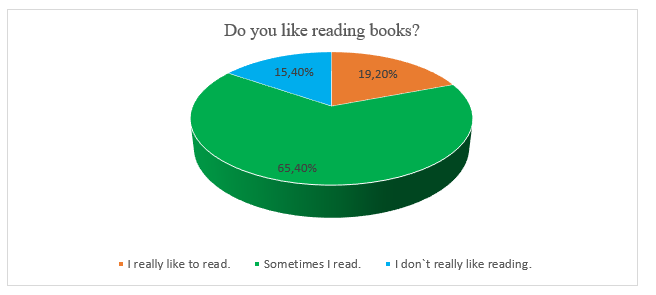
Figure 1. Students’ attitudes towards reading
In response to the question, “Do you encounter difficulties while reading or working with texts in Bulgarian?” 42.3% of respondents said they often experience difficulties (Figure 2). Sometimes they have trouble reading texts in Bulgarian – 34.6%. Only a small number of students, 11.5%, reported that they do not face any difficulties while reading in Bulgarian.
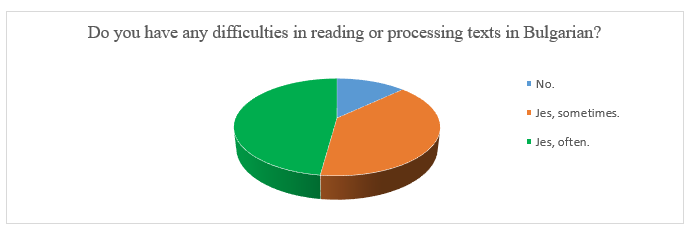
Figure 2. Results of a survey of students regarding difficulties in reading or processing texts in Bulgarian
During the survey of 3rd – 4th-grade students in schools with instruction in Bulgarian, their reading preferences were identified. Thus, 30.8% enjoy reading fairy tales, and 42.3% prefer adventure stories. A significantly smaller percentage, 11.5%, favour reading short stories, and 7.7% enjoy comics (Figure 3). The popularity of adventure literature is likely explained by the fact that these are children’s favourite genres. At the same time, none of the surveyed students chose poetry.
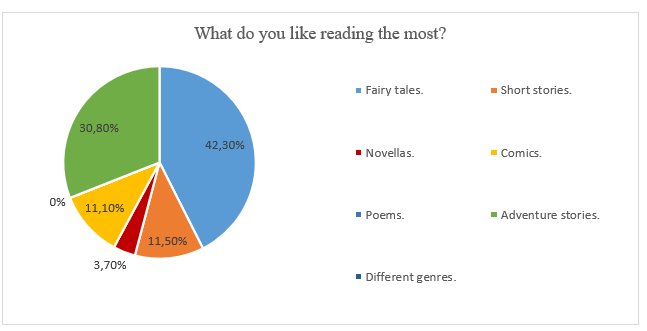
Figure 3. Results of the survey on interest in texts (different depending on style and genre specifics)
At the same time, it is essential to study the practice of teaching Ukrainian as a state language. In the course of the research, questionnaires were prepared, and an online survey was conducted among teachers who teach Ukrainian in grades 3 – 4 with instruction in the languages of national minorities. The majority of teachers (61.1%) are primary school teachers; the rest are Ukrainian language teachers. Teachers from different regions of Ukraine were surveyed: Transcarpathia (44.4%), Lviv (11.1%), Khmelnytskyi (5.6%) and Chernivtsi (38.9%) (Figure 4).
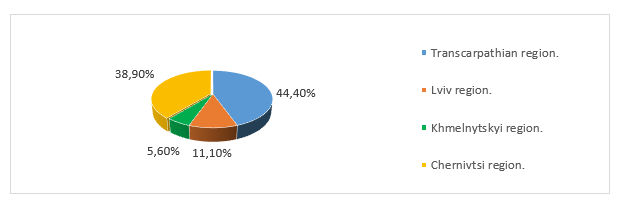
Figure 4. Geography of the residence of survey participants
For optimal results, the survey included teachers with varying lengths of teaching experience (Figure 5).
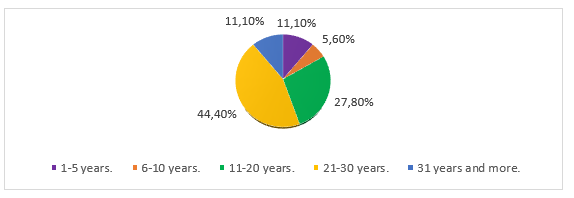
Figure 5. Work experience of the surveyed teachers
According to the Information on the Languages of Instruction and the Study of Languages as a Subject in General Secondary Education Institutions of the Ministry of Education and Science of Ukraine, other ministries, and private institutions (2024/2025 academic year) (Information on the Languages of Instruction, 2025), there are 11,991 educational institutions in Ukraine (183,949 – 181,940 classes) with 3,706,699 students. In most educational institutions, instruction is conducted in Ukrainian. At the same time, 191 institutions—comprising 2,009 classes—have 43,177 students studying in English, Bulgarian, German, Polish, Romanian, Slovak, Hungarian, or in several languages. Considering this, the survey included teachers from institutions with classes using different languages of instruction (Figure 6).
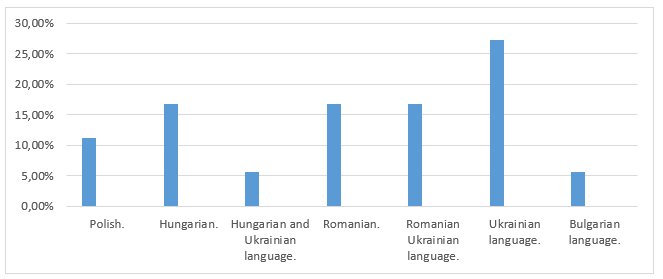
Figure 6. Language of instruction at the educational institution where respondents work
That is, based on the criterion of the language of instruction, the survey covered teachers from general secondary education institutions with classes taught in Ukrainian, Bulgarian, Polish, Hungarian, and Romanian. In some educational institutions, instruction is carried out in two languages, Romanian and Ukrainian, or Hungarian and Ukrainian.
During the survey to clarify the essence of the concept of “reading literacy”, the following responses were received from teachers who teach Ukrainian in grades 3 – 4 (Table 1).
Table 1. The essence of the concept of “reading literacy”
(according to the results of a survey of teachers)
| № | Interpretation of the concept
of “reading literacy”
|
Percentage of surveyed respondents, % |
| 1. | “the ability of a student to perceive, analyse, use, and evaluate written texts to achieve specific goals, expand their knowledge, and develop their reading potential” | 66,7%
|
| 2. | “the ability of students to understand a text, evaluate it, and be able to use what they have read” | 16,7%
|
| 3. | “the ability to interpret a text that has been read and draw certain conclusions” | 11,1% |
| 4. | “an integrated component that encompasses subject-specific, cross-curricular, and personal outcomes” | 0% |
| 5. | “a system of relevant abilities and skills” | 5,6% |
None of the surveyed teachers consider reading literacy to be an integrated component described in Table 1. 94.5% of the surveyed respondents consider reading literacy to be an ability. The majority of the surveyed teachers (66.7%) chose the interpretation that refers to the perception of the text, its analysis, evaluation and use, and, at the same time, to the expansion of the reading potential. For 27.8% of teachers, “reading literacy” is a narrower concept. In particular, 16.7% chose the answer option “the ability of students to understand the text, evaluate it, and be able to use what they have read”, 11.1% limited themselves to the interpretation of the text and the synthesis of conclusions.
During the research, it was determined which types of texts, according to teachers who teach Ukrainian as the state language, interest students in grades 3–4 and motivate them to read (Figure 7).
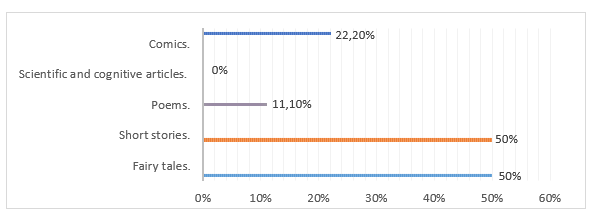
Figure 7. Results of the survey on interest in texts (different depending on style and genre specifics)
It should be noted that teachers could choose several response options. In the ranking of texts that are most interesting to students in grades 3 – 4, fairy tales and short stories took first place, which is natural given the students’ age. Comics ranked second. Poems attract less interest (11.1%), while teachers noted a complete lack of interest in reading scientific and informative articles (0%).
However, although literary-style texts are the most accessible for younger schoolchildren to work with, teachers assessed the level of students’ interest in reading literary texts (Figure 8).
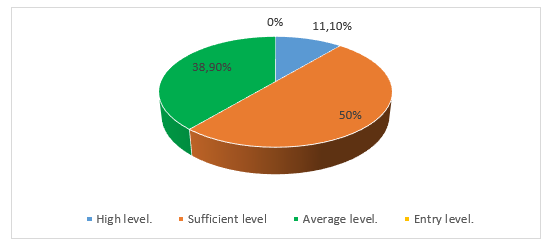
Figure 8. Students’ level of interest in reading literary texts
(according to the results of the teachers’ survey)
11.1% of teachers chose the option “high level”, 50% – “medium level”, 38.9% – “sufficient level”. No one chose “initial level”.
In our opinion, for the effective development of reading literacy, it is advisable for teachers to u9e additional texts (in addition to those included in the textbook) in the process of teaching the Ukrainian language as the state language, including texts in the students’ native language. In practice, such a situation has been observed (Figure 9).
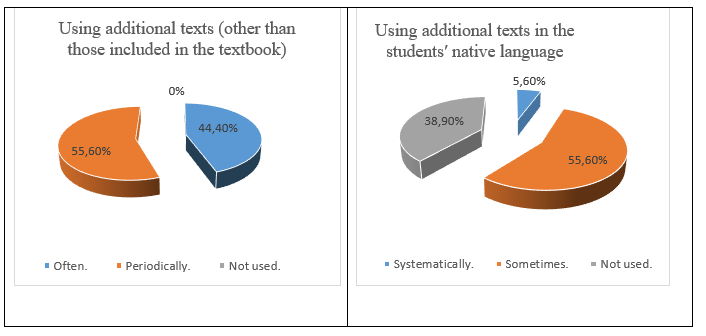
Figure 9. Teachers’ use of additional texts in Ukrainian and native languages
That is, in the process of teaching the Ukrainian language to students in grades 3 – 4 with instruction in national minority languages, additional texts in the Ukrainian language (except those contained in the textbook), according to the respondents, are often used by 44.4% of teachers, and periodically by 55.6%. Regarding the use of additional texts in the native language (except those contained in the textbook), the situation is as follows: systematically by 5.6%, periodically by 55.6%. 38.9% of teachers do not use additional texts in the native language at all during lessons. At the same time, in our opinion, using texts in the students’ native language (for example, for comparative work with parallel bilingual versions of a text) can be beneficial.
Information on the frequency of translating texts from Ukrainian into the native language and from the native language into Ukrainian in the process of studying Ukrainian as the state language has been clarified (Figure 10).
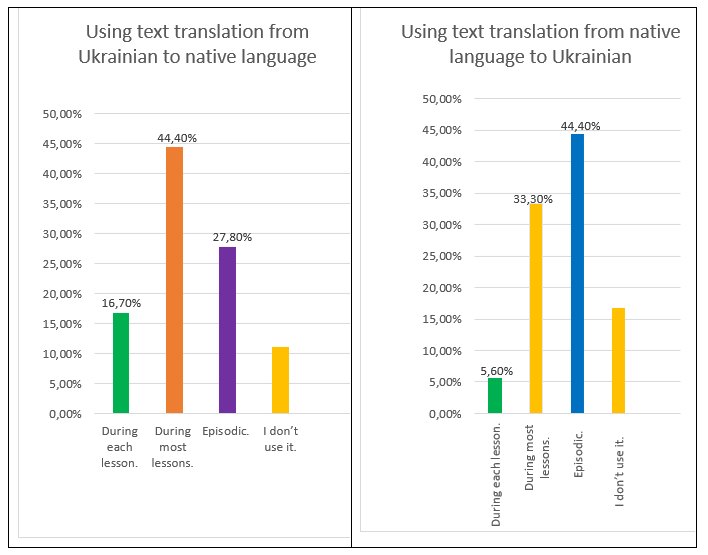
Figure 10. Frequency of using text translation from Ukrainian into the native language and from the native language into Ukrainian in the process of studying Ukrainian as the state language
A comparison of the survey results looks like this (Table 2).
Table 2. Comparison of the frequency of using text translation from Ukrainian to the native language, and from the native language to Ukrainian
| № | Frequency of use
|
Translation from Ukrainian into the native language, percentage of surveyed respondents, % | Translation from the native language into Ukrainian, percentage of surveyed respondents, % |
| 1. | During each lesson | 16,7%% | 5,6% |
| 2. | During most lessons | 44,4% | 33,3% |
| 3. | During some lessons | 27,8% | 44,4% |
| 4. | Do not use | 11,1% | 16,7% |
Teachers, depending on the frequency, show different preferences for translating texts from Ukrainian into the native language or from the native language into Ukrainian.
At the same time, the surveyed teachers thus assessed the level of reading literacy of the majority of students in the class(es) they teach Ukrainian (Figure 11).
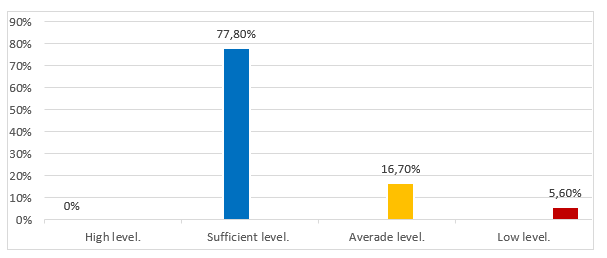
Figure 11. Level of students’ reading literacy
According to the survey results, no classes were identified in which most students have a high level of reading literacy. In 77.8% of classes, the majority of students have a sufficient level of reading literacy, and in 16.7% of classes, a medium level prevails. Additionally, it should be noted that in 5.6% of classes, most students have a low level of reading literacy.
The surveyed teachers expressed their opinions regarding the priority of factors that influence the development of reading literacy during the study of the Ukrainian language by students in grades 3 – 4 with instruction in national minority languages (Table 2).
Table 2. Factors influencing the development of reading literacy in students of grades 3 – 4 during the study of Ukrainian as the state language
| №з/п | Factors | Percentage of surveyed respondents, % |
| 1. | Student motivation | 38,9% |
| 2. | Teacher’s methods and techniques | 22,2% |
| 3. | Frequency and systematicity of reading activity | 27,8% |
| 4. | Parental support | 5,6% |
| 5. | All the listed factors | 5,6% |
The surveyed teachers consider the following factors to be prevalent in the development of reading literacy of students in grades 3-4during the study of Ukrainian as the state language:
– developing positive motivation in students (38,9%);
– frequency and consistency of reading activity (27,8%);
– methods and techniques of work (22,2%).
Only 5.6% of teachers selected the option “Parental support”. The same proportion of teachers shared the view that all the listed factors are equally important.
Regarding the methods, techniques, and approaches used by teachers to achieve progress in the reading literacy of students in grades 3 – 4, the following responses were received:
– developing positive motivation for students to read;
– using methods such as encouragement, guided reading, extracurricular reading, creative reading, speed reading, role-playing reading, dramatisation, and didactic games;
– holding a competition for the best reader;
– illustrating the most interesting parts of the text;
– work on the text of fairy tales, use of relay games based on Ukrainian folk tales;
– use of verbal methods (retelling, creative storytelling) and practical methods (staging works, drawing illustrations);
– use of works by contemporary authors;
– highlighting important information and discussing the reading with others;
– students work on the text in pairs or groups;
– using methods, exercises, and projects such as “Microphone”, “True or False“, “Cluster”, “Venn Circle”, Bloom’s “Daisy Ring” Taxonomy, “Cubing”, “Fishbone”, “Six Thinking Hats”, “Journalist”, “Book Advertisement and ot”, hers.
Considering the specifics of developing reading literacy during lessons of the Ukrainian language as the state language, the importance of audio-visual tools was emphasised.
Teachers who participated in the survey expressed different opinions regarding the resources or support needed for more effective development of reading literacy in students of grades 3 – 4. In particular, these include limiting the number of students (no more than 10 per lesson), accessible texts (not scientific), engaging and captivating tasks and teaching methods, and parental support. Other resources mentioned include textbooks with audio support, separate vocabulary books to accompany textbooks, interesting supplementary literature, anthologies of contemporary literature, visual aids, various online resources for interactive work, literary games, quizzes, crosswords, and more.
We find the following statement by a respondent interesting: “I believe that more time should be devoted to working on a single text, because what matters is not the number of texts read, but the reader’s level of mastery of certain skills, the ability to use these skills in practice, in real life”.
Conclusions
The survey covered teachers with varying lengths of teaching experience from general secondary education institutions with instruction in Ukrainian, Polish, Romanian, and Hungarian. It explored how teachers understand the essence of the concept of “reading literacy.” The results obtained indicate the presence of conditions that can contribute to the effective development of reading literacy among students in grades 3 – 4 in schools with instruction in the languages of national minorities.
The research revealed the peculiarities of students’ interest in texts of different styles and genres, and their preferences. The situation observed in the educational process creates opportunities for broader use of literary texts, additional texts in Ukrainian (beyond those included in textbooks), texts in native languages, and translations.
The survey results show the adequacy of the use of independent learning activities by students (during most lessons – 61.1%, during each lesson – 16.7%) and prove the need to strengthen work on forming positive motivation of students to read in Ukrainian, as well as to diversify the methods, techniques, and tools for developing reading literacy of students in grades 3-4 during lessons of the Ukrainian language as the state language.
REFERENCES
Bohdanets-Biloskalenko, N. (2023). Linguodidactic principles of teaching the Ukrainian language in grades 5 – 6 in schools with instruction in minority languages. In: Language and Literature Education: Development and Implementation of New Methods and Teaching Practices: Proceedings of the All-Ukrainian Scientific and Practical Conference (October 12, 2023, Kyiv) (pp. 7 – 12). Institute for Modernization of Educational Content.
Bohdanets-Biloskalenko, N. (2024). Linguodidactic principles of teaching the Ukrainian language to students in grades 5–6 in schools with instruction in minority languages in the context of the New Ukrainian School. In World of Didactics: Didactics in the Modern World: Proceedings of the 3rd International Scientific and Practical Internet Conference (November 7 – 8, 2023) (pp. 36 – 38). Liudmyla Publishing House.
Bohdanets-Biloskalenko, N., & Davydiuk, L. (2023). Genesis of the problem of teaching the Ukrainian language to students in grades 5 – 6 in minority language schools within multilingual education: History, current state, and development prospects. Ukrainian Pedagogical Journal, (2), 125 – 136.
Bondarenko, N. (2020). Reading literacy of Ukrainian students: Highlights from PISA 2018. Ukrainian Pedagogical Journal, (2), 95 – 103.
Vasylieva, D., Holovko, M., Zhuk, Yu., Kozlenko, O., Liashenko, O., Naumenko, S., & Novosolova, V. (2020). Lessons of PISA 2018: Methodological recommendations. Pedahohichna Dumka. https://lib.iitta.gov.ua/719572/1/PISA.pdf.
Ministry of Education and Science of Ukraine. (2025). Information on languages of instruction and study of the language as a subject in general secondary education institutions (2024/2025 academic year). https://surl.li/vamgcm.
Holovchenko, N. (2020). Developing reading literacy while studying modern Ukrainian literature in secondary schools. Current Issues in the Humanities, 2(27), 114 – 121. https://surli.cc/qfsazu.
Deorditsa, T., Hladiushyna, R., Voronina, M., & Tolmachov, V. (2025). The construct of “reading literacy”: An attempt to explain in psychological terms. Physical and Mathematical Education, 40(1), 16 – 18. https://surl.li/dhbsva
Lokshyna, O., Zabolotna, O., & Topuzov, O. (Eds.). (2023). PISA-format tasks for developing students’ reading literacy (Part 2, 2nd electronic, revised edition). Pedahohichna Dumka.
Mazorchuk, M., Vakulenko, T., Tereshchenko, V., Bychko, H., Shumova, K., Rakov, S., Horokh, V., et al. (2019). National report on the results of the international study of education quality PISA 2018. Ukrainian Center for Educational Quality Assessment.
Novosolova, V. (2024). PISA 2022: Developing reading literacy in the school course of the Ukrainian language. Problems of the Modern Textbook, 32, 171 – 184.
Petruk, O. (2019). Main principles of selecting content for Ukrainian-language education in Romanian-language schools. In Portraits of Teachers: Proceedings of the International Symposium (pp. 108 – 110).
Vakulenko, T., Lomakovych, S., & Tereshchenko, V. (2017). PISA: Reading literacy. Ukrainian Center for Educational Quality Assessment.
Pyast, N. & Kushch, O. (2025). Formation and development of students’ reading literacy in the context of key skills of the present and future. Scientific Bulletin of Vinnytsia Academy of Continuing Education. Series “Pedagogy. Psychology”, (7), 184 – 192.
Khoroshkovska, O. N. (2013). Theoretical and methodological foundations of teaching Ukrainian language and speech in primary schools with minority languages of instruction in Ukraine. Pedahohichna Dumka.
Arkhypova, V. P., Pakhomova, T. H., Savytska, H. I., Sichkar, S. I., & Yurchak, V. A. (2020). Reading literacy as a component of lifelong learning. Cherkasy.
Shevchuk, L. M. (2024). Applying differentiation in teaching the Ukrainian language in multilingual settings. In Ukrainian Language in the World: Proceedings of the 8th International Scientific and Practical Conference (pp. 199 – 203). Lviv Polytechnic National University, MIOK.
Shevchuk, L. M. (2022). Forms of organizing Ukrainian language instruction as a state language for students in grades 5–6. Innovative Pedagogy, 48, 99 – 102.
Shevchuk, L., Kalinina, L., & Melnyk, O. (2024). Ukrainian in education of students from Ukraine: Modern features. In Society. Integration. Education: Proceedings of the International Scientific Conference, 1, 517 – 527.
Yatsenko, T. (2021). Developing students’ reading literacy in the school literary education system: Psychological and pedagogical aspects. Scientific Journal of the National Pedagogical Dragomanov University. Series “Pedagogical Sciences: Realities and Perspectives”, 2(79[5]), 214 – 218. http://chasopys.ps.npu.kiev.ua/archive/79/part_2/48.pdf
Yatsenko, T., & Slyzhuk, O. (2024). Developing reading literacy of students in grades 5 – 6 in Ukrainian literature lessons: A methodological guide [Electronic edition]. Osvita Publishing House.
OECD. (2019). PISA 2018 assessment and analytical framework. https://www.oecd.org/en/publications/pisa-2018-assessment-and-analytical-framework_b25efab8-en/full-report/component-2.html#chapter-d1e92
Levchuk, P. (2015). Ukrainian-Polish bilingualism in the light of survey research. In I. Bundza, A. Krawczuk, J. Kowalewski, & O. Slyvynski (Eds.). Polish Language and Polish Studies in Eastern Europe: Past and Present (pp. 143 – 158). INKOS.
Padeshka, M. (2024). On the comprehensibility and understanding of literature. Bulgarian Language and Literature, 66(6s), 80 – 88.
Petrov, A. (2024). What, how much, and how do Bulgarian students read (at home and abroad)? (Analysis of survey data). Bulgarian Language and Literature, 66(6s), 19 – 32.
Prof. Nataliia Bohdanets-Biloskalenko, DSc.
Head of the Department of Language Education for National Minorities
and Foreign Literature, Institute of Pedagogy
National Academy of Educational Sciences of Ukraine
Kyiv, Ukraine
E-mail: nataliabogdanets@gmail.com
Larysa Shevchuk
Candidate of Pedagogical Sciences, Senior Researcher,
Department of Language Education for National Minorities and
Foreign Literature, Institute of Pedagogy
National Academy of Educational Sciences of Ukraine
E-mail: sh_l_m@ukr.net
Igor Goroshkin
Candidate of Pedagogical Sciences,
Head of the Department of Foreign Language
Teaching, Institute of Pedagogy
National Academy of Educational Sciences of Ukraine
E-mail: igorgoroshkin@gmail.com
>> Download the article as a PDF file <<

Свързани статии:
 Developing Materials for Assessing Reading Literacy and Comprehension of early Graders in Bulgaria and Italy
Web Design Training Approach in High School
Stage of Secondary Profiled Education
Study of the Opinion of Social Pedagogical
Students about Volunteering Work
Generative Artificial Intelligence in Education: Problems and Solutions
Developing Materials for Assessing Reading Literacy and Comprehension of early Graders in Bulgaria and Italy
Web Design Training Approach in High School
Stage of Secondary Profiled Education
Study of the Opinion of Social Pedagogical
Students about Volunteering Work
Generative Artificial Intelligence in Education: Problems and Solutions