
Krasimira Dimitrova
Burgas State University “Prof. Dr. Assen Zlatarov” (Bulgaria)
https://doi.org/10.53656/ped2026-2s.06
Abstract. The present article presents pedagogical approaches for introducing geometric transformations – symmetry, translation, rotation, and rhythmicity – into mathematics education in preschool and primary school contexts, with a focus on the methodological preparation of future teachers. The study was conducted using a qualitative approach with the participation of students enrolled in the Preschool and Primary School Pedagogy programme, who design and pilot play-based, bodily engaging, and visually supported learning activities in a controlled, simulated educational environment. Data were collected through observation protocols, analytical rubrics, and reflective forms. The results indicate a high level of professional engagement and creativity, as well as improved methodological awareness of geometric transformations, with the identified difficulties mainly related to translation and work with coordinate grids. The present study contributes through the development and piloting of an integrated methodological model combining movement, visualisation, and play for the effective preparation of future teachers.
Keywords: geometric transformations, spatial thinking, play-based approaches, movement-based learning, early childhood mathematics education
Geometric transformations, such as symmetry, translation, rotation, and rhythm, are fundamental concepts in mathematics education. Although abstract in nature, these topics can be presented in an accessible and engaging way from an early age. In contemporary educational practice, increasing attention is paid to creating a stimulating learning environment in which children can explore, experiment, and develop their spatial thinking through movement, play, and visualisation.
The formation of basic mathematical concepts in preschool and primary school age requires approaches that correspond to children’s age-related and cognitive characteristics. This poses a challenge for pedagogical practice to transform abstract mathematical ideas into concrete, bodily experienced, and meaningful activities for children. The present article aims to present methodological guidelines and good practices for introducing geometric transformations through play-based, visual, and interdisciplinary activities.
- Theoretical foundations
Research in the field of early mathematics education emphasises the role of manipulative materials and body-based learning in understanding geometric concepts (Clements, 2014). Play-based and visual activities have proven to be particularly effective for introducing concepts such as symmetry, translation, and rotation. Through movement, hand modelling, the use of blocks, and other didactic materials, children develop concrete representations of abstract relationships and dependencies.
In addition to visual stimuli, rhythm and music play an important role in supporting learning. They provide opportunities for integrating movement and mathematical thinking, which enriches the learning experience (An, 2015). Sensorimotor learning – through experience and participation – supports not only the acquisition of terminology and actions but also the formation of more stable and enduring knowledge.
Interdisciplinary connections between mathematics and the arts – especially visual art – stimulate children’s creativity and analytical thinking (Moldavan, 2023). Through activities in which children create symmetrical images, draw figures using rotation, or construct compositions through translation, both artistic–aesthetic and logical–mathematical processes are activated simultaneously.
Contemporary approaches encourage the pedagogical integration of play, art, and mathematics. In this way, conditions are created for deeper understanding, sustainable acquisition of mathematical knowledge, and the development of a positive attitude toward learning from an early age (Azaryahu, 2024).
- Geometric transformations in preschool and primary school age
The formation of spatial representations and understanding of geometric relationships begins at an early age and plays a significant role in children’s overall mathematical development. Geometric transformations—such as symmetry, translation, rotation, and rhythmicity—are fundamental elements of geometry, and their introduction from an early age contributes to the development of spatial orientation skills, pattern recognition, and analytical thinking (Clements and Sarama, 2009). Numerous studies emphasise that children aged between 4 and 8 years can successfully comprehend these concepts when they are presented through visual, play-based, and practical activities appropriate to their developmental level (Papic, Mulligan and Mitchelmore, 2011; Sinclair and Bruce, 2015).
The inclusion of geometric transformations in early education supports the establishment of a foundation for more complex mathematical and spatial concepts in later stages of learning (Battista, 2007). This necessitates purposeful pedagogical support and the integration of instructional strategies based on visualisation, movement, and interdisciplinarity (Van den Heuvel-Panhuizen, 2008).
2.1. Symmetry
Symmetry represents the preservation of shape under a specific transformation—most commonly reflection across an axis. In pedagogical literature, it is regarded as an initially intuitive concept that children perceive from an early age through observing forms in nature, art, and bodily movement. According to Clements and Sarama (2009), symmetry is “natural” for children, as they identify mirror correspondences in bodies, faces, and the surrounding environment.
2.2. Translation (Sliding)
Translation is a geometric transformation in which a given figure is moved in a specific direction over a fixed distance without changing its shape, orientation, or size. It is a more abstract concept; however, children can successfully acquire it through activities involving the movement of objects, grid-based games, and the arrangement of repeating forms. According to Papic, Mulligan and Mitchelmore (2011), translation develops skills related to pattern recognition and logical sequences. Mulligan and Mitchelmore (1997) emphasise that learning through the visual shifting of figures or through the use of manipulative materials supports the understanding of translational invariance and sequencing, which are key to mathematical literacy.
2.3. Rotation (Turning)
Rotation is a transformation in which a figure is turned around a fixed point by a given angle. This concept combines orientation, angle, and movement and is considered more difficult for young learners to grasp. Nevertheless, Lehrer et al. (1998) note that through the practical use of templates, rotating discs, and bodily movements, children can develop initial representations of rotation. Clements and Sarama (2004) propose the use of digital tools (e.g., drawing software) that allow learners to explore rotations interactively and visually. Through these approaches, rotation becomes tangible and easier to understand.
2.4. Rhythmicity (Repetition of patterns)
Rhythmicity in the context of geometric transformations is associated with repetitive patterns and sequences – for example, the alternation of colours, shapes, movements, or sounds. These regularities support mathematical thinking by introducing children to the ideas of sequence and predictability. According to Mulligan and Prescott (2013), rhythmicity is fundamental to the development of spatial structuring and abstract thinking. Clements and Sarama (2007) emphasise that modelling through music, movement, and visual sequences encourages children’s activity and builds a foundation for more complex arithmetic and algebraic concepts in the future.
- Coordinate grids and schemes
Coordinate grids are two-dimensional systems of rows and columns used to determine the location of objects in space. In preschool and primary education, they are not introduced as formal coordinate systems with numerical axes, but as structured play fields or tables that support children’s spatial orientation, movement, and navigation. Their use aims to develop spatial thinking, logical organisation, and sequence tracking.
According to Clements and Sarama (2009), coordinate grids effectively support early mathematical structuring by enabling children to link linguistic expressions (e.g., “second column,” “third row”) with concrete spatial positions, particularly when integrated with play, movement, and visual materials. Activities involving object placement, route tracing, and position encoding enhance orientation, memory, and initial understanding of coordinate relationships.
In Bulgarian pedagogical literature, Galabova (2009) highlights work with coordinate grids as a key factor in developing spatial representations in preschool children, emphasising play-based and visual approaches that foster independent cognitive activity. The use of tabular schemes and coordinate fields supports the formation of concepts such as place, direction, order, and position, while developing orientation in two-dimensional space. Combining visualisation, movement, and verbal labelling contributes to deeper and more durable understanding.
Early development of coordinate grid skills is directly related to later learning in geometry, arithmetic, and informatics, where concepts such as position, coordinates, axis-based movement, and tabular representation are widely applied.
- Methodology
The present study applies a qualitative research approach focused on observation, pedagogical design, and the analysis of educational practices. The main emphasis is placed on the development of skills for transforming abstract mathematical concepts (symmetry, translation, rotation, and rhythmicity) into play-based, bodily engaging, and visually supported forms of learning.
The study involves 65 students enrolled in the bachelor’s programme Preschool and Primary School Pedagogy at Burgas State University “Prof. Dr. Assen Zlatarov” and was conducted during the academic years 2022/23, 2023/24, and 2024/25. The selection of participants was purposeful and based on the following criteria:
– successful completion of the first part of a course in the methodology of mathematics education in preschool age;
– willingness to participate in pedagogical experimentation and reflection;
– basic skills in designing play-based learning activities.
The experimental work was carried out in a controlled, simulated educational environment in which the students assumed the role of teachers and, in some cases, the role of children. No children were included as participants, which allows the study to be regarded as a pedagogical experiment with future teachers, focused on methodological preparation.
The research procedures included:
– observation of pedagogical behaviour in a controlled (simulated) educational environment;
– analysis of learning tasks created by the participants;
– assessment of the impact of the activities on the cognitive and emotional engagement of children;
– reflection by the participants regarding the applicability and effectiveness of the methods used.
For the purposes of the qualitative analysis, the following data collection instruments were used:
– observation protocols completed by a lecturer and an assistant during the play-based sessions;
– analytical rubrics developed on the basis of predefined criteria;
– written reflective forms completed by the students;
– oral feedback and discussions following the experimental activities.
Within the experimental phase, the participants created short instructional scenarios intended for children aged between 5 and 8 years. The scenarios were tested in a simulated educational environment, where the following aspects were observed:
– clarity of instructions;
– engagement and participation of the children/participants in the play-based activities;
– alignment of the content with age-related characteristics.
The evaluation was conducted through qualitative analysis of the observations, supplemented by reflective notes and feedback from the participants.
Methodological framework of the study
The methodological framework of the study is based on the principles of qualitative pedagogical analysis and includes observation, analysis of developed instructional materials, participant reflection, and evaluation of the effectiveness of educational activities. The aim is to determine the extent to which the designed play-based exercises, focused on geometric transformations, support the acquisition of abstract mathematical concepts and contribute to the development of professional-pedagogical competencies in future teachers.
In the process of analysing and interpreting the results, criteria and indicators were applied to assess participants’ engagement, the methodological value of the developed activities, and their potential for future application in educational practice. These criteria and indicators were formulated on the basis of observations and expert judgement.
Criterion 1. Professional engagement and creativity
Indicators: Initiative in designing activities; originality and innovativeness; integration of interdisciplinary elements (movement, music, art).
Criterion 2. Methodological adequacy
Indicators: Alignment of the content with children’s age-related characteristics; clarity of instructions; logical structure of the exercises; correct application of geometric concepts (symmetry, translation, rotation, rhythmicity).
Criterion 3. Effectiveness of bodily-motor and visual support
Indicators: Use of movement, bodily rotations, symmetrical actions, and visual models; visible engagement of children (real or simulated); facilitated understanding of concepts through visualisation.
Criterion 4. Applicability in future pedagogical practice
Indicators: Expressed readiness to use play-based approaches; awareness of the pedagogical benefits of the methods; ideas for application in a real classroom setting.
Criterion 5. Development of professional-methodological competencies
Indicators: Ability to design instructional scenarios; application of interdisciplinary techniques; critical thinking in the selection of approaches.
The specified criteria and indicators enable a multi-perspective assessment of the study results and support the formulation of well-grounded conclusions regarding the effectiveness of the applied approaches in the training of future mathematics teachers.
Assessment and interpretation procedure
The assessment is carried out by a lecturer in the methodology of mathematics education using an analytical rubric with three descriptive levels: low, medium, and high levels of indicator manifestation. In addition, students’ self-assessment is taken into account through reflective forms. The data are interpreted qualitatively through the identification of recurring patterns and trends.
Stages of the study
The study was conducted through the following stages: theoretical preparation, project-based activity, experimental implementation, and analysis of results. Each stage was aligned with the aim of the study – to design and evaluate effective educational activities for the formation of concepts related to geometric transformations in preschool and primary school children.
Stage 1: Theoretical preparation
In the first stage, participants were introduced to key concepts related to geometric transformations—symmetry, translation, rotation, and rhythmicity—as well as to methodological principles for working with children aged 5–8 years. An analysis of good pedagogical practices and existing educational resources was conducted, including visual materials and didactic games.
Stage 2: Design of instructional activities
At this stage, students designed short instructional scenarios incorporating play-based and visual elements aimed at presenting geometric transformations. The activities were adapted to children’s age-related and cognitive characteristics and integrated movement, music, art, and visual materials. The design process was carried out in small groups.
Stage 3: Experimental implementation
The developed scenarios were implemented in a simulated educational environment, with students assuming the role of instructors. Play-based sessions were conducted with other students acting as children, under close observation of the process. The main focus was on the effectiveness of instructions, the logic of the activities, visual support, and participant engagement.
Stage 4: Observation and data collection
During the implementation, observational notes were recorded, participants’ reactions and behaviours were documented, and qualitative indicators of understanding and engagement were identified. The extent to which participants demonstrated understanding of the presented geometric transformations was assessed.
Stage 5: Analysis and interpretation of results
A qualitative analysis of the collected data—observations, participant feedback, and lecturers’ evaluations—was conducted. Effective practices were synthesised, and conclusions were formulated regarding the applicability and impact of the play-based activities on the acquisition of geometric concepts.
- Examples from the experimental work
Symmetry is one of the most frequently used and most easily visualised geometric transformations. The designed activities focused on recognising and creating mirror symmetry through bodily movements, artistic elements, and manipulative materials. The symmetry tasks can be conditionally divided into movement-based games and worksheets. Selected methodological designs are presented.
For the initial formation of concepts related to symmetry, it is appropriate to use grids with squares in which an axis of symmetry is visualised. The use of a grid makes it possible to integrate, alongside geometric knowledge, knowledge related to numbers and counting (Fig. 1).
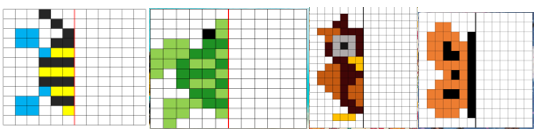
Figure 1. Symmetry in a grid
Translation as a geometric transformation involves moving objects in a specific direction over a fixed distance, without changing their shape, size, or orientation. The students developed activities in which translation was concretised through movement in space, work on a grid, and modelling with various materials. Examples include:
“Step forward” (movement on a coordinate scheme). Aim: To acquire concepts related to direction, order, and displacement through translation. Description: A grid (e.g., 3×3 squares) is marked on the floor. One child takes on the role of a “robot,” while the others give movement instructions. After each command, the figure must move precisely, without rotation. Outcome: The activity supports understanding of linear displacement, spatial orientation, and practice of left – right and up – down concepts. Materials: paper grid, floor markings, or a grid-patterned mat.
In translation tasks using grids, progression should move from simple to more complex. It is recommended to include so-called “anchors” that serve as reference points when transferring to the duplicated grid. Counting is a fundamental activity in this type of translation.
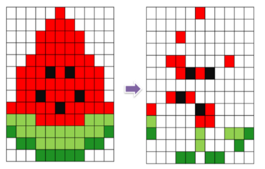
Figure 2. Translation in a grid
Rotation (turning) is a geometric transformation in which a figure rotates around a specific point (the centre of rotation) by a given angle and in a specific direction (clockwise or counterclockwise). For children, this is a more complex transformation, as it simultaneously involves direction, angle, and a fixed reference point. Therefore, it is important for rotation to be presented in practice through bodily movement, rotating models, and play-based activities with visual elements. Below are several activities developed in the experimental work:
The game “Turn like a windmill.” Aim: To introduce the concept of rotation through movement and play. The activity develops orientation, coordination, and a sense of direction. Required materials: A circle (outlined with coloured tape or chalk) divided into four sectors; a picture or model of a windmill; music (optional). Description: Children are introduced to the windmill model and the idea that its blades rotate around a centre. They stand around the circle (4–6 children), with each child representing a “blade” in a sector. Upon the command “The wind is blowing!”, they rotate clockwise by one-quarter turn (90°), taking the next position. After four rotations, they return to the starting position. Music may be used to indicate the tempo of rotation.
Rhythmicity in mathematics education is understood as the repetition of actions, movements, or figures in a specific order and tempo. Although it is often perceived as a musical term, rhythmicity also forms a basis for understanding patterns, sequences, and regularities, including in a geometric context. In early mathematics education, rhythmicity combines bodily experience, auditory perception, and visual organisation, which makes it a valuable tool for developing sequential thinking.
“Rhythmic counting with shapes” (visual sequence). Aim: To form an understanding of rhythm through repeating geometric shapes. Description: Shapes are arranged on a board or cardboard in a rhythmic sequence (e.g., circle – square – circle – square – ?). The child is required to complete the missing shape and to create their own rhythmic sequence. Outcome: The activity develops logical thinking, abstract generalisation, and mathematical modelling.
A coordinate grid represents a two-dimensional system of rows and columns through which objects are positioned using a pair of values. In a pedagogical context, it supports the development of spatial orientation, logical thinking, and understanding of structure by creating conditions for a transition from concrete to abstract mathematical representations. Work with coordinate schemes in preschool and primary school age is carried out through play-based tasks, visual models, and activities that engage spatial perception.
In the present experimental work involving coordinates and grids, various types of labyrinths were developed. Typically, a narrative is introduced in which a character is presented, and children are placed in an active role to help the character and guide them through the labyrinth. For the purposes of the experimental work, tasks of the “labyrinth” type were classified into the following categories: grid-based labyrinth with a movement legend; grid-based labyrinth with target coordinates; grid-based labyrinth organised by rows and columns; labyrinth with a map of pictorial markers; labyrinth with conditional possibilities.
A grid-based labyrinth with a movement legend requires the character to pass through the labyrinth, with at least two possible exits at the end. The entry point for the character is clearly defined by a symbol, usually an arrow indicating direction. The movement legend determines each subsequent step and includes translation and rotation of movement. Three important indicators are used: direction (indicated by an arrow), number of steps (indicated by a number), and colour. Colour is introduced to avoid ambiguity regarding the square from which the counting of steps begins. Each pair of consecutive moves is marked with a different colour. The need to introduce colour emerged from observations in real pedagogical settings and the identification of key errors in this respect (Fig. 3).
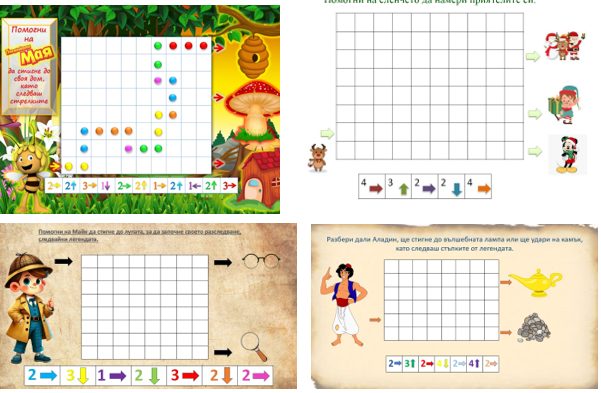
Figure 3. Grid-based labyrinth with a movement legend
A grid-based labyrinth with target coordinates uses a grid of squares. In some of the squares, figures (or letters) are placed. The aim is to identify the correct object or to form a specific word. The coordinates may be numbers, letters, or images. It is important to consistently follow the same condition – (row, column) – by analogy with a coordinate system – (x, y). An example of a task condition is: “You will find out which dress Cinderella chose for the ball by locating it at (star, pumpkin). Circle it” (Fig. 4). Children trace where the specified row and column intersect and circle the object in the corresponding square. A reverse task involves providing objects with specific coordinates and asking learners to place them in the designated positions within the grid. This type of exercise is highly effective for the propaedeutics of the concept of a coordinate system and for working with it in subsequent grades.
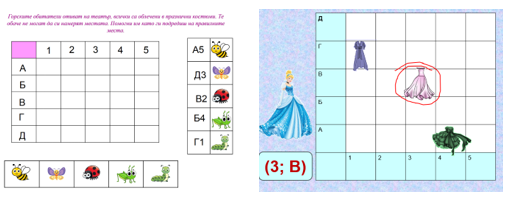
Figure 4. Grid-based labyrinth with target coordinates
A labyrinth with pictorial markers can have different visual representations depending on the task narrative, but it is not organised as a grid of squares or points (Fig. 5). Following the sequence of pictorial markers develops skills related to following an algorithm and enhances spatial thinking and observational skills.
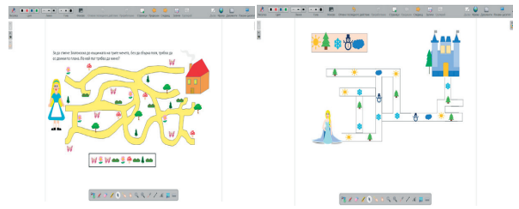
Figure 5. Labyrinth with a map of pictorial markers
A labyrinth with conditional possibilities may be organised as a grid or in a different environment, depending on the task narrative. A condition is set according to the educational objective and the cognitive abilities of the learners. Single conditions or two or three conditions simultaneously may be applied—for example, the character may move only along blue objects, triangles, blue triangles, or small blue triangles (Fig. 6).
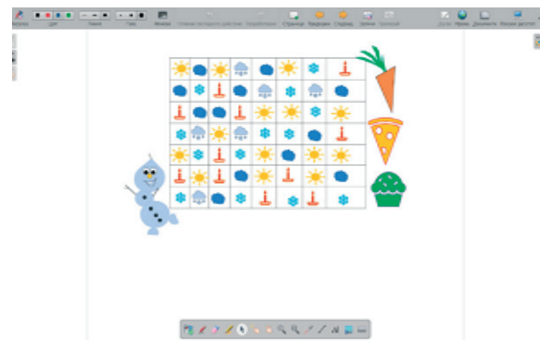
Figure 6. Labyrinth with conditional possibilities (single condition – blue object)
- Results
The results are not presented as quantitative measurements, but as generalised trends and observed patterns of behaviour and pedagogical thinking.
6.1. Summary of results by criteria
To visualise the overall distribution of results across the main criteria, a radar chart was used (Fig. 7). It presents a synthesised assessment of the manifestation of each criterion on a three-level descriptive scale (low, medium, and high), derived from the dominant observations during the experimental work.
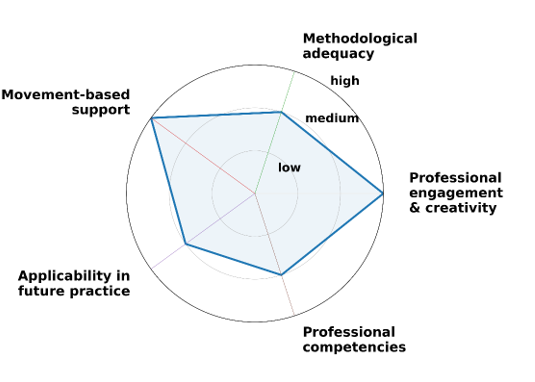
Figure 7. Qualitative distribution of results across assessment criteria
The diagram shows that the highest level of manifestation is observed for the criteria Professional Engagement and Creativity and Effectiveness of Movement-Based Support. This indicates strong participant engagement and the effectiveness of bodily-motor and visual approaches in conceptualising geometric transformations. A relatively lower but stable level of manifestation is observed for Applicability in Future Practice and Development of Professional Competencies, which can be explained by the students’ limited practical pedagogical experience and the absence of a real classroom environment.
6.2. Systematised observations, difficulties, and examples
Table 1 summarises the main results of the qualitative analysis according to the predefined criteria, presenting typical observations, identified difficulties, and illustrative examples from the experimental work.
6.3. Typical and atypical participant reactions
Typical participant reactions include active involvement, a willingness to improvise, and a positive emotional attitude toward activities that engage the body and imagination. Atypical reactions were observed in tasks requiring simultaneous coordination of movement, counting, and directional orientation, where some participants demonstrated hesitation and a need for additional support.
6.4. Successful pedagogical solutions and identified difficulties
The analysis of the results shows that the most successful activities are those that combine bodily experience, visual structure, and a clear narrative context (e.g., labyrinths, “robot” games, rotational movements around a fixed centre). The difficulties identified in more abstract tasks highlight the importance of a clear methodological framework, gradual progression, and visual support in the introduction of geometric transformations.
Table 1. Summary of qualitative observations by assessment criteria
| Assessment criterion | Typical observed manifestations | Identified difficulties | Illustrative examples from the experimental work |
| Professional engagement and creativity | High levels of activity, initiative, and originality in designing play-based scenarios; integration of movement, music, and visual art elements | Some activities follow stereotypical models | Design of bodily games for symmetry and narrative-based labyrinths |
| Methodological adequacy | Clear structure of most tasks; alignment with age-related characteristics | Insufficient gradual progression in translation tasks | Work with coordinate grids using predefined reference points |
| Effectiveness of bodily-motor and visual support | Increased engagement and improved understanding through movement and visualisation | Difficulties in combining movement and counting | Rotational activities around a fixed point |
| Applicability in future pedagogical practice | Expressed readiness to apply play-based approaches | Need for adaptation to a real classroom environment | Reflections on group management during movement-based activities |
| Development of professional–methodological competencies | Increased confidence in planning instructional situations; interdisciplinary thinking | Limited experience with digital visualisations | Use of schemes, grids, and visual markers |
- Conclusions
The results of the study indicate that play-based activities grounded in geometric transformations facilitate future teachers’ understanding of abstract mathematical concepts. Through participation in the design and implementation of educational situations, students demonstrate increased engagement, creativity, and methodological awareness.
Exercises combining movement, music, visual models, and narrative proved to be particularly effective, as this approach engages the visual, kinaesthetic, and auditory channels.
Feedback from the participants reveals that experiencing geometric concepts through movement and rhythm prepares them more confidently for teaching at an early age. Students perceive the interdisciplinary approach (mathematics, music, movement, and art) as especially effective for creating an engaging and comprehensible learning environment.
The conclusions confirm the potential of bodily and visual approaches for developing professional skills and motivation for innovative teaching of early geometry.
- Conclusions and summary
The results confirm the effectiveness of play-based, body-based, and visually supported approaches for learning geometric transformations in the methodological preparation of future preschool and primary school teachers. The use of movement, visualisation, manipulative materials, and interdisciplinary elements (music, art, narrative) promotes deeper understanding of symmetry, translation, rotation, and rhythmicity and supports the development of durable knowledge and positive teaching motivation.
Qualitative analysis indicates high levels of professional engagement and creativity, reflected in active participation throughout the design and implementation of instructional activities and in the generation of independent play-based and methodological solutions. Improved understanding is evidenced by more precise terminology use, correct application of transformations, and the ability to adapt activities to children’s age-related characteristics.
The main difficulties concern translation and work with coordinate grids, underscoring the need for clear task structuring, gradual progression, and stable visual support. Overall, the findings highlight the strong potential of an integrated approach combining spatial thinking, movement, and visualisation and support the purposeful inclusion of such models and related digital competencies in university teacher education.
REFERENCES
An, S. A.; Tillman, D. A.; Paez, C. R. (2015). Music-themed mathematics education as a strategy for improving elementary preservice teachers’ mathematics pedagogy and teaching self-efficacy. Journal of Mathematics Education at Teachers College, 6(1), 9 – 24. DOI: 10.61403/2158-6594.1525.
Azaryahu, L.; Ariel, I.; Leikin, R. (2024). Interplay between music and mathematics in the eyes of the beholder: Focusing on differing types of expertise. Humanities and Social Sciences Communications, 11. DOI: 10.1057/s41599-024-03631-z.
Battista, M.T. (2007). The development of geometric and spatial thinking. In: Lester, F.K. (ed.) Second Handbook of Research on Mathematics Teaching and Learning. Charlotte, NC: Information Age Publishing, 843 – 908.
Clements, D.H.; Sarama, J. (2004). Engaging Young Children in Mathematics: Standards for Early Childhood Mathematics Education. Mahwah, NJ: Lawrence Erlbaum Associates.
Clements, D.H., Sarama, J. (2007). Early childhood mathematics learning. In: Lester, F.K. (ed.) Second Handbook of Research on Mathematics Teaching and Learning. Charlotte, NC: Information Age Publishing, 461 – 555.
Clements, D.H.; Sarama, J. (2009). Learning and Teaching Early Math: The Learning Trajectories Approach. New York: Routledge. ISBN: 978-0-415-82851-2.
Clements, D. H., Sarama, J. (2014). Learning and Teaching Early Math: The Learning Trajectories Approach. Routledge. ISBN 9780367521974.
Galabova, D. (2009). Teoriya i metodika na formirane na matematicheski predstavi u detsata v detskata gradina. Veliko Tarnovo: Slovo. [In Bulgarian].
Lehrer, R.; Jenkins, M.; Osana, H. (1998). Longitudinal study of children’s reasoning about space and geometry. Journal for Research in Mathematics Education, 29(2), 163 – 183.
Moldavan, A. M.; Johnson, G. (2023). Arts-based interdisciplinary music and mathematics tasks: Exploring conceptualizations of equitable creative learning in teacher education. Georgia Educational Researcher, 20(2).
Mulligan, J. and Mitchelmore, M. (1997). Young children’s intuitive models of symmetry and transformation. Educational Studies in Mathematics, 33(1), 65 – 81.
Mulligan, J. and Prescott, A. (2013). Mathematical Structure and Early Mathematics Learning. In: Lindmeier, A.M. and Heinze, A. (eds.) Proceedings of the 37th Conference of the International Group for the Psychology of Mathematics Education ( pp. 345 – 352). Kiel: PME.
Papic, M., Mulligan, J.; Mitchelmore, M. (2011). Assessing the development of early patterning skills. Australasian Journal of Early Childhood, 36(4), 47 – 55. DOI: 10.5951/jresematheduc.42.3.0237.
Sinclair, N.; Bruce, C.D. (2015). New opportunities in geometry education at the primary school. ZDM Mathematics Education, 47, 319 – 329. DOI: 10.1007/s11858-015-0693-4.
Van den Heuvel-Panhuizen, M. (2008). Children Learn Mathematics: A Learning-Teaching Trajectory with Intermediate Attainment Targets for Calculation with Whole Numbers in Primary School. Rotterdam: Sense Publishers. DOI: 10.1163/9789087903954. ISBN: 9789087903961.
Dr. Krasimira Dimitrova, Assoc. Prof.
ORCID iD: 0000-0002-8693-4052
Burgas State University “Prof. Dr. Assen Zlatarov”
Burgas, Bulgaria
E-mail: krasimira_dimitrova@btu.bg
>> Download the article as a PDF file <<

Свързани статии:
 Kantian Hesitations around the Proper Philosophical Method
The Corporal-Oriented Approach to Education: A Turn towards the Whole Person
"Are There Serbs in Serres?" The Serbian Consulate in Serres and The Macedonian Question at The Turn of the Twentieth Century
Политиките за признаване на предишно обучение – предизвикателство за висшето образование в Европа
Kantian Hesitations around the Proper Philosophical Method
The Corporal-Oriented Approach to Education: A Turn towards the Whole Person
"Are There Serbs in Serres?" The Serbian Consulate in Serres and The Macedonian Question at The Turn of the Twentieth Century
Политиките за признаване на предишно обучение – предизвикателство за висшето образование в Европа