
Dr. Penka Valcheva, Assoc. Prof.
Burgas State University “Prof. Dr. Assen Zlatarov” (Bulgaria)
https://doi.org/10.53656/ped2026-2s.02
Abstract. This report examines affective forecasting among pedagogy students at Burgas State University “Prof. Dr. Assen Zlatarov” in Bulgaria.The aim of the study is to conduct a comparative analysis between the students’ affective forecasts and their retrospective emotional feedback regarding their subjective happiness resulting from academic success during the winter examination session. For the purposes of the study, a questionnaire with four items was developed and administered in two stages. There is a gap of 5 months between the two stages of the research, and the study was conducted during the 2024 – 2025 academic year. The study involved 205 students aged between 19 and 47 from all undergraduate pedagogy programs within the Faculty of Social Sciences. Responses were measured using a five-point Likert scale, which categorized student answers into five levels – very low, low, neutral, high, and very high levels of happiness/unhappiness. The majority of students exhibited a tendency to overestimate the happiness they expected to feel from future academic success. This trend was most pronounced among students aged 19 – 25, who initially forecasted a very high level of happiness upon passing their exams, but reported slightly lower actual emotional states just five months later. These findings support the concept of hedonic adaptation, which suggests that most people return to an emotional baseline after positive or negative events. Despite inaccuracies in affective forecasting, the study’s results indicate that students are highly engaged in their academic achievements, which serve as a significant source of subjective well-being.
Keywords: affective forecasting, emotional feedback, pedagogy students, hedonic adaptation
In everyday usage, the phrase “I am happy,” according to McMahan and Estes (McMahan & Estes, 2011), encompasses three distinct understandings:
– The first understanding conceptualizes happiness as a temporary state: positive emotions derived from casual conversation, a delicious meal, or a few pleasant hours spent on one’s birthday.
– The second understanding views happiness as overall life satisfaction, in terms of well-being or a subjective evaluation of the quality or contentment with one’s own life. Most studies have focused on this interpretation of happiness.
– The third understanding defines happiness as a personal trait: an individual who is typically optimistic and joyful (Stamatov & Sariyska, 2022).
Two main approaches can be identified in the study of happiness.
The first assumes that happiness can be objectively assessed from the standpoint of an external observer. For students, this might mean having good health, being free from financial concerns, enjoying a loving family and partner, having loyal and trustworthy friends, and feeling inspired by their studies.
The second approach views happiness as a subjective experience, which cannot be evaluated by an external observer (Stamatov & Sariyska, 2022). Subjective happiness can be described but not measured. These personal assessments of well-being are important for several reasons:
– First, individuals respond very differently to the same circumstances because of their unique expectations, values, and personal histories. Subjective assessments allow for the interpretation of “facts” from an “individual perspective” (Stamatov & Sariyska, 2022).
– Second, happiness and life satisfaction are personally significant goals and rights. Among the list of desired goals, happiness is rated the highest. It is a central element in people’s conception of a good life and a good society (Diener, Oishi & Lucas, 2003).
Studies by Nes and Roysamb (Nes & Roysamb, 2015), Diener, Lucas and Oishi (Diener, Lucas & Oishi, 2018) and Sheldon and Lyubomirsky (Sheldon & Lyubomirsky, 2019) identify three key factors that explain individual levels of happiness: genetic factors, life circumstances, and intentional activities.
Genetic factors refer to inherent predispositions that can account for variations in individuals’ happiness levels. Evidence comes from studies on twins, whose genetic imprints are considered difficult to alter (Stamatov & Sariyska, 2022).
The significance of genetic influence lies in the concept of the happiness set point. This can be described as a typical personal level of happiness. According to Lyubomirsky, Sheldon and Schkade (Lyubomirsky, Sheldon & Schkade, 2005), this level is genetically determined, considered fixed, stable over time, and resistant to influence or control. Although external conditions may temporarily increase or decrease happiness, most people tend to revert to this baseline over time (Luhman, Hofmann, Eid & Lucas, 2012).
Changes in life circumstances – such as income, education, career development, family formation, childbirth, and lifestyle – are categorized as the second factor in Lyubomirsky’s model (Lyubomirsky, Sheldon & Schkade, 2005). However, these do not bring about the expected long-term changes in happiness.
One explanation offered by Lyubomirsky for the weak influence of circumstances on happiness relates to the process of hedonic adaptation. When life changes occur, whether positive or negative, they initially affect happiness levels. Over time, however, individuals adapt to these changes and return to their happiness set point—the baseline of subjective well-being (Diener, Lucas & Scollon, 2006). This implies that the happiness gained from favorable circumstances is short-lived. Hedonic adaptation occurs more quickly and perhaps more thoroughly in response to positive events than to negative ones (Lyubomirsky, 2011).
The timing of hedonic adaptation depends on three factors: the nature of the events (whether they are positive or negative, expected or unexpected, or experienced as a break from normality), (Stamatov, 2018); individual personality traits and the ability to explain the event (Wilson & Gilbert, 2008); and the variety introduced over time (Van Boven, 2005).
In their research, Wilson and Gilbert (Wilson & Gilbert, 2005) found that we experience considerable difficulty when trying to predict what will make us happy or unhappy. The concept of affective forecasting illustrates that we tend to overestimate the impact of future events and that we are, in fact, rarely accurate in our predictions. We recover from negative events much faster than anticipated and derive less happiness from positive events than we originally expected (Stamatov & Sariyska, 2022).
The challenges stemming from affective forecasting are linked to our tendency to overestimate both the duration and intensity of our emotional responses to future events. We make inaccurate predictions about our own emotional reactions because we conceptualize the event in a flawed way. We fail to consider that, with the passage of time, many other events will occur that will influence our emotions and thoughts. We tend to imagine future events as unfolding in a vacuum, whereas in reality, life will be filled with numerous other happenings and activities that will divert our attention and impact our happiness levels (Stamatov & Sariyska, 2022).
Unfortunately, when forecasting, we focus solely on the anticipated event and ignore the other events that will take place. We also fail to recognize how significantly our inner world will change in ways that make the event feel normal, expected, or even ordinary. The ease with which we rationalize such experiences remains hidden from our conscious awareness (Stamatov & Sariyska, 2022).
The third component in the model proposed by Lyubomirsky, Sheldon, and Schkade (2005) emphasizes the importance of intentional activities and thought patterns. This is considered the most significant factor in determining happiness. The term “intentional” highlights the freedom of choice, commitment, and presence of will. An example of intentional activity among students is dedicated exam preparation (Lyubomirsky, Sheldon & Schkade, 2005).
The effectiveness of preparation depends on various conditions related both to the nature of the activity and to the individual (Lyubomirsky, 2011). Conditions associated with the activity include the frequency, variety, and adequacy of the actions a student undertakes in preparation—how often they study and how they organize their time to retain what they read. Conditions linked to the individual involve personal motivation, the effort exerted, and the level of engagement with the upcoming exam, how interesting the material is to the student and how important the exam is to them.
The concept of affective forecasting by Wilson & Gilbert (Wilson & Gilbert, 2008), especially in the context of desired future events, raises the question of how genuinely happy students actually feel about their own academic achievements.
Research Methodology
The aim of the present study is to conduct a comparative analysis between affective forecasts and retrospective emotional responses among pedagogy students at Burgas State University “Prof. Dr. Assen Zlatarov,” regarding their subjective happiness resulting from academic success during the winter examination session. For this purpose, a questionnaire with four items was developed, structured around the following questions:
Stage One – Affective Forecasting Questions:
- How happy will you feel if you pass all your exams this semester?
- How unhappy will you feel if you fail one or more exams this semester?
Stage Two – Emotional Feedback Questions:
- How happy do you feel about having passed your exams?
- How unhappy do you feel about not having passed all your exams?
The first stage of the study was conducted at the beginning of the 2024–2025 academic year (for part-time students – in early September; for full-time students – in early October). The questions included in this stage recorded the students’ affective forecasts. The second stage of the study was carried out at the beginning of the spring semester (for part-time students – at the end of January; for full-time students – at the end of February). The questions at this stage captured the students’ retrospective emotional feedback. The interval between the two stages was five months.
Responses were measured using a five-point Likert scale, which categorized students’ answers into five levels – very low, low, neutral, high, and very high levels of happiness/unhappiness (Figure 1).
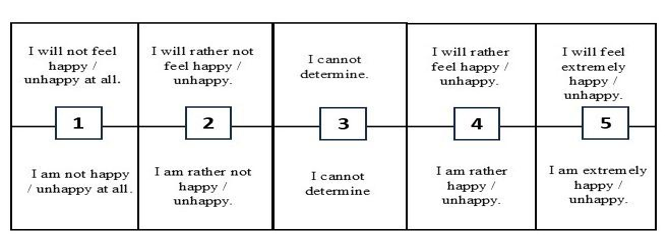
Figure 1. Likert scale for assessing predicted and current levels of happiness (satisfaction with achievements)
Results Analysis
The study involved 205 students from all undergraduate pedagogy programs, both full-time and part-time, within the Faculty of Social Sciences at Burgas State University “Prof. Dr. Assen Zlatarov.” As shown in Figure 2, the most representative sample came from the “Preschool and Primary School Pedagogy” program in both forms of study. The smallest number of participants was from the newly established „Special Pedagogy“ program, which, at the time, included only first-year students.
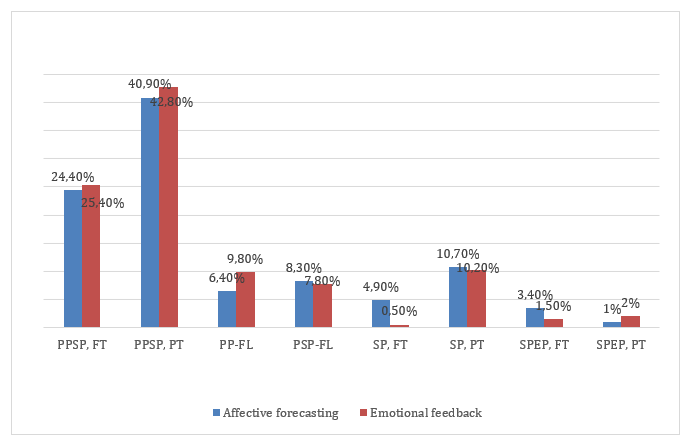
Legend:
PPSP, FT – Preschool and Primary School Pedagogy, Full-Time Study;
PPSP, PT – Preschool and Primary School Pedagogy, Part-Time Study;
PP-FL – Preschool Pedagogy with a Foreign Language;
PSP-FL – Primary School Pedagogy with a Foreign Language;
SP, FT – Social Pedagogy, Full-Time Study;
SP, PT – Social Pedagogy, Part-Time Study;
SPEP, FT – Special Pedagogy, Full-Time Study;
SPEP, PT – Special Pedagogy, Part-Time Study.
Figure 2. Percentage distribution of students by major and form of study
The students participating in the study ranged in age from 19 to 47 years. In both full-time and part-time forms of education, the highest proportion of respondents were aged 19 to 25. In the first round of the survey, this age group included 114 students (55.6% of all respondents), and in the second round – 111 students (54.1%). The distribution of students across academic years was approximately similar in both stages. In the first stage, there were 62 first-year, 64 second-year, 40 third-year, and 39 fourth-year students. In the second stage, 61 were in the first year, 47 in the second, 59 in the third, and 38 in the fourth year. The most notable variation was between second- and third-year students: in the first round, second-year students outnumbered third-year students, while in the second round, the opposite was observed (Figure 3).
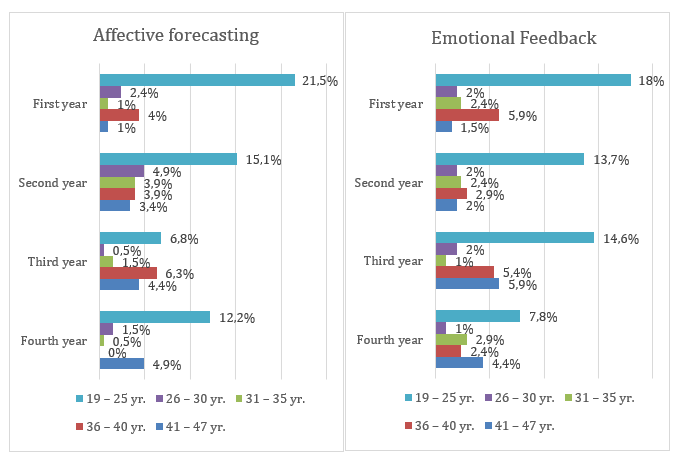
Figure 3. Percentage distribution of students by age and year of study
In response to the question, “How happy will you feel if you pass all your exams this semester?” nearly 91% of students indicated that they would feel extremely happy. An additional 8.4% stated they would “rather feel happy.” These responses reflect the high motivation for success and emotional engagement of students in the academic process. Only 1.5% reported that they were unable to determine their feelings (Figure 4).
Regarding the question, “How unhappy will you feel if you fail one or more exams this semester?” 33.2% of students stated they would feel extremely unhappy, and 22.1% said they would “rather feel unhappy.” Notably, nearly 24% of students indicated they could not determine their response. This may reflect emotional uncertainty, suggesting that students are unsure how they would react in such a situation, or it may indicate avoidance – a reluctance to share their true feelings due to insecurity or vulnerability. Furthermore, 14% of students said they would “rather not feel unhappy,” and 5.5% reported they “would not feel unhappy at all.” These answers clearly suggest that a portion of students do not perceive exam outcomes as critical to their well-being. Considering that the research was conducted at the beginning of the academic year, these last two responses should not be interpreted as indicators of low academic engagement or indifference toward academic achievement (Figure 4).
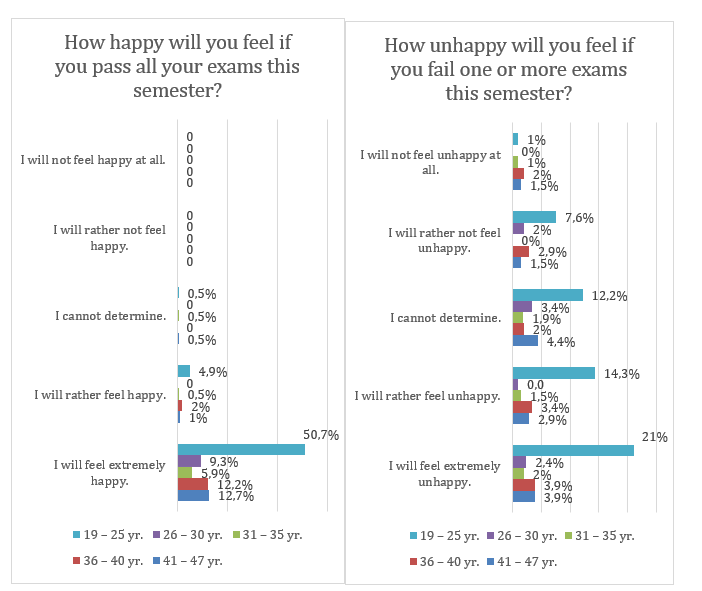
Figure 4. Percentage distribution of responses to the questions used for affective forecasting
In response to the question, “How happy do you feel about having passed your exams?” 81.5% of students answered that they feel extremely happy. An additional 12.9% stated “I rather feel happy,” while 5.9% said “I cannot determine.” No negative responses were recorded.
A comparison between the responses to the affective forecasting questions and the emotional feedback questions shows a decrease in predicted happiness levels in three age groups. The most notable drop was among students aged 19 – 25, who constituted the most representative sample in the study. In the first stage, 50.7% of them predicted they would feel extremely happy, but in the second stage, only 44.6% confirmed experiencing this level of happiness. Declines were also observed among students aged 26 – 30 and 41 – 47. Conversely, students aged 31 – 35 and 36 – 40 reported higher levels of happiness than originally forecasted, with an increase of just over 3% in their average scores (Figure 5).
To the question, “How unhappy do you feel about not having passed all your exams?” 93% of students responded that they are not unhappy at all, 2.2% said they could not determine, and 5.1% stated they “rather feel unhappy” (Figure 5).
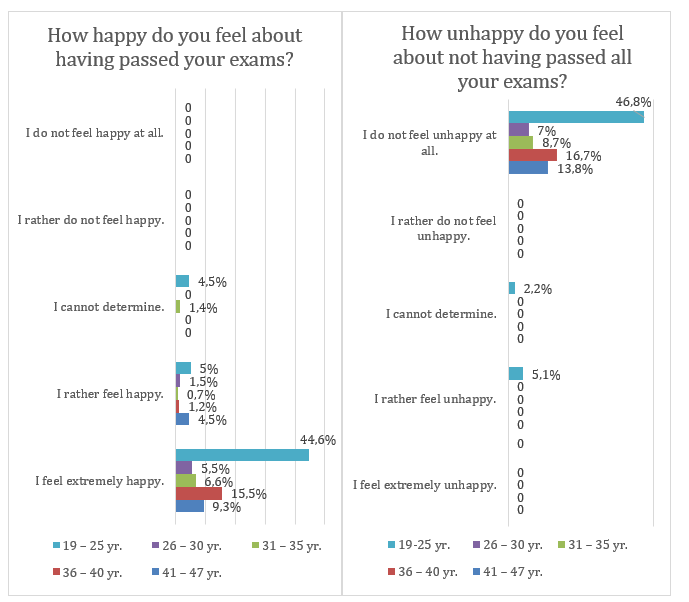
Figure 5. Percentage distribution of responses to the questions used for emotional feedback
These results clearly indicate the students’ satisfaction with their academic performance. A total of 92.7% of respondents reported having passed all of their exams. Among them, 38.1% achieved excellent grades, 41.8% very good, 14.3% good, and 2.1% average. Among first-year students, those with very good grades were the most prevalent, which suggests successful adaptation to the new academic environment. In the higher academic years, there was a predominance of students with excellent grades. These findings unequivocally confirm the students’ strong motivation and their commitment to the learning process (Figure 6).
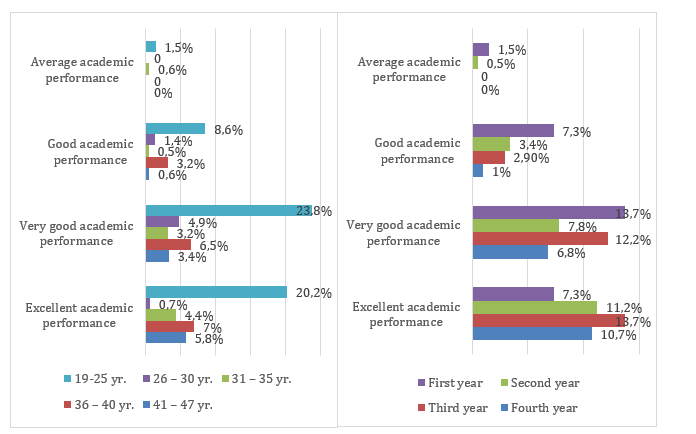
Figure 6. Percentage distribution of students by semester performance according to their age and year of study
Conclusions
Most students demonstrated a tendency to overestimate the happiness they anticipated from future academic success. This was most evident among students aged 19–25, who, in the first stage of the study, predicted a very high level of happiness upon successfully passing their exams. However, their actual emotional responses recorded in the second stage showed a slight decrease compared to their initial expectations, even after just five months. These findings support the concept of hedonic adaptation, which suggests that most individuals return to an emotional baseline after both positive and negative events. Despite the inaccuracies in affective forecasting, the results of the study indicate that students are highly committed to their academic performance, which represents a significant source of subjective well-being for them.
REFERENCES
Diener, E., Oishi, S., & Lucas, R. E. (2003). Personality, culture, and subjective well-being: Emotional and cognitive evaluations of life. Annual Review of Psychology, 54, 403 – 425. https://doi.org/10.1146/annurev.psych.54.101601.145056.
Diener, E., Lucas, R. E., & Scollon, C. N. (2006). Beyond the hedonic treadmill: Revising the adaptation theory of well-being. American Psychologist, 61(4), 305 – 314. https://doi.org/10.1037/0003-066X.61.4.305.
Diener, E., Lucas, R. E., & Oishi, S. (2018). Advances and open questions in the science of subjective well-being. Collabra: Psychology, 4(1). https://doi.org/10.1525/collabra.115.
Luhmann, M., Hofmann, W., Eid, M., & Lucas, R. E. (2012). Subjective well-being and adaptation to life events: A meta-analysis. Journal of Personality and Social Psychology, 102(3), 592 – 615. https://doi.org/10.1037/a0025948.
Lyubomirsky, S. (2011). The how of happiness: A new approach to getting the life you want. Penguin Press.
Lyubomirsky, S., Sheldon, K. M., & Schkade, D. (2005). Pursuing happiness: The architecture of sustainable change. Review of General Psychology, 9(2), 111 – 131. https://doi.org/10.1037/1089-2680.9.2.111.
McMahan, E. A., & Estes, D. (2011). Hedonic versus eudaimonic conceptions of well-being: Evidence of differential associations with self-reported well-being. Social Indicators Research, 103, 93 – 108. https://doi.org/10.1007/s11205-010-9698-0.
Nes, R. B. & Røysamb, E. (2015). The heritability of subjective well-being: Review and meta-analysis. In: M. Pluess (Ed.), Genetics of psychological well-being: The role of heritability and genetics in positive psychology (pp. 75 – 96). Oxford University Press. https://doi.org/10.1093/acprof:oso/9780199686674.003.0005.
Sheldon, K. M., & Lyubomirsky, S. (2019). Revisiting the sustainable happiness model and pie chart: Can happiness be successfully pursued? The Journal of Positive Psychology, 14(2), 145 – 154. https://doi.org/10.1080/17439760.2019.1689421.
Stamatov, R. (2018). Hedonistichnata adaptatsiya vav vremeviya kontekst na shtastieto. Pozitivna psichologiya, 2, 51 – 86.
Stamatov, R., & Sariyska, S. (2022). Pozitivna psichologiya. Hermes.
Van Boven, L. (2005). Experientialism, materialism, and the pursuit of happiness. Review of General Psychology, 9(2), 132 – 142. https://doi.org/10.1037/1089-2680.9.2.132.
Wilson, T. D., & Gilbert, D. T. (2005). Affective forecasting: Knowing what to want. Current Directions in Psychological Science, 14(3), 131 – 134. https://doi.org/10.1111/j.0963-7214.2005.00355.x.
Wilson, T. D., & Gilbert, D. T. (2008). Explaining away: A model of affective adaptation. Perspectives on Psychological Science, 3(5), 370 – 386. https://doi.org/10.1111/j.1745-6924.2008.00085.x.
Dr. Penka Valcheva, Assoc. Prof.
ORCID iD: 0000-0002-1546-5631
Burgas State University “Prof. dr. Assen Zlatarov”
Burgas, Bulgaria
E-mail: penka-vulcheva@uniburgas.bg
>> Изтеглете статията в PDF <<